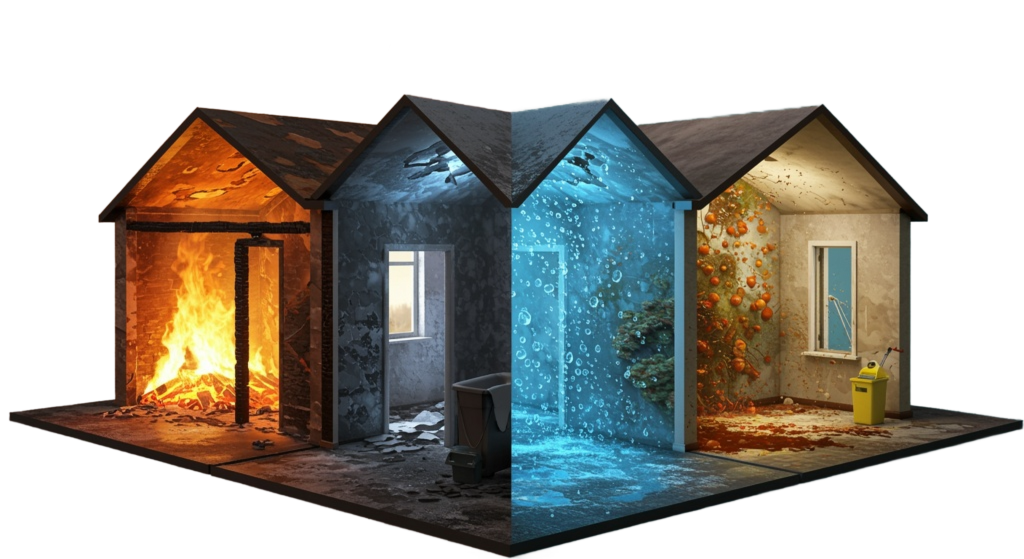
fire damage | water damage inspection
What Is Water Damage Inspection?
Water Damage Inspection is a systematic evaluation of a property affected by water intrusion, leaks, flooding, plumbing failures, storm-related events, or elevated moisture conditions to identify the source of water, determine the extent of damage, assess affected building materials, and document conditions that may impact structural integrity, indoor environmental quality, and restoration requirements. The inspection may include moisture mapping, non-invasive and invasive moisture testing, thermal imaging, humidity analysis, and evaluation of potential microbial growth conditions. Findings are documented to support property owners, insurers, attorneys, and restoration professionals in making informed decisions regarding mitigation and repairs. Inspections and recommendations are performed in accordance with recognized industry best practices and are consistent with applicable ANSI/IICRC S500 Standard for Professional Water Damage Restoration, as well as other relevant IICRC standards and guidelines governing water damage assessment, documentation, drying principles, and restoration planning.
What Is Fire Damage Inspection?
FIRE DAMAGE INSPECTION Is a comprehensive assessment of a property affected by fire, smoke, soot, heat, and firefighting activities to determine the extent of damage, identify safety concerns, evaluate restoration versus replacement needs, and document conditions for property owners, insurers, attorneys, and restoration professionals. The inspection may include structural observations, moisture evaluation, smoke and soot contamination assessment, HVAC impact review, thermal imaging, and indoor environmental considerations. Reports are prepared following industry-recognized restoration and inspection practices consistent with applicable IICRC Standards, including guidance from ANSI/IICRC S700 (Professional Fire and Smoke Damage Restoration), ANSI/IICRC S500 (Professional Water Damage Restoration) when water mitigation is involved, and other relevant standards and best practices governing damage assessment, documentation, and restoration planning.